Antigravity
AI features in an editor
Auto-captions, silence removal, reframe
A person drives the timeline and the AI does chores inside it. Genuinely useful, and it stops at the chore: nothing here builds a video you did not already cut.
Most tools that edit video with AI hand you a new file. An agent that holds the project reads it, changes it, renders it and looks at the result, then goes again. That loop is the difference.
macOS · Windows · Linux · no credits, no render limits
what agentic means
They get shelved together and they are not alternatives. Only the third is agentic, and the difference is who holds the project.
Auto-captions, silence removal, reframe
A person drives the timeline and the AI does chores inside it. Genuinely useful, and it stops at the chore: nothing here builds a video you did not already cut.
Describe it, receive a file
One box in, one video out. Fast, and the output is the end of the road: changing anything means prompting again and hoping the parts you liked survive.
Read, edit, render, look, edit again
The agent has the actual project and works the loop it is good at. Every change is a diff against files that persist, so the tenth revision is as cheap as the first.
editing, not regenerating
Ask a generator for one fix and it rolls everything again, including the parts you already approved. An agent edits the scene you named and leaves the rest untouched, so the tenth revision costs what the first did.
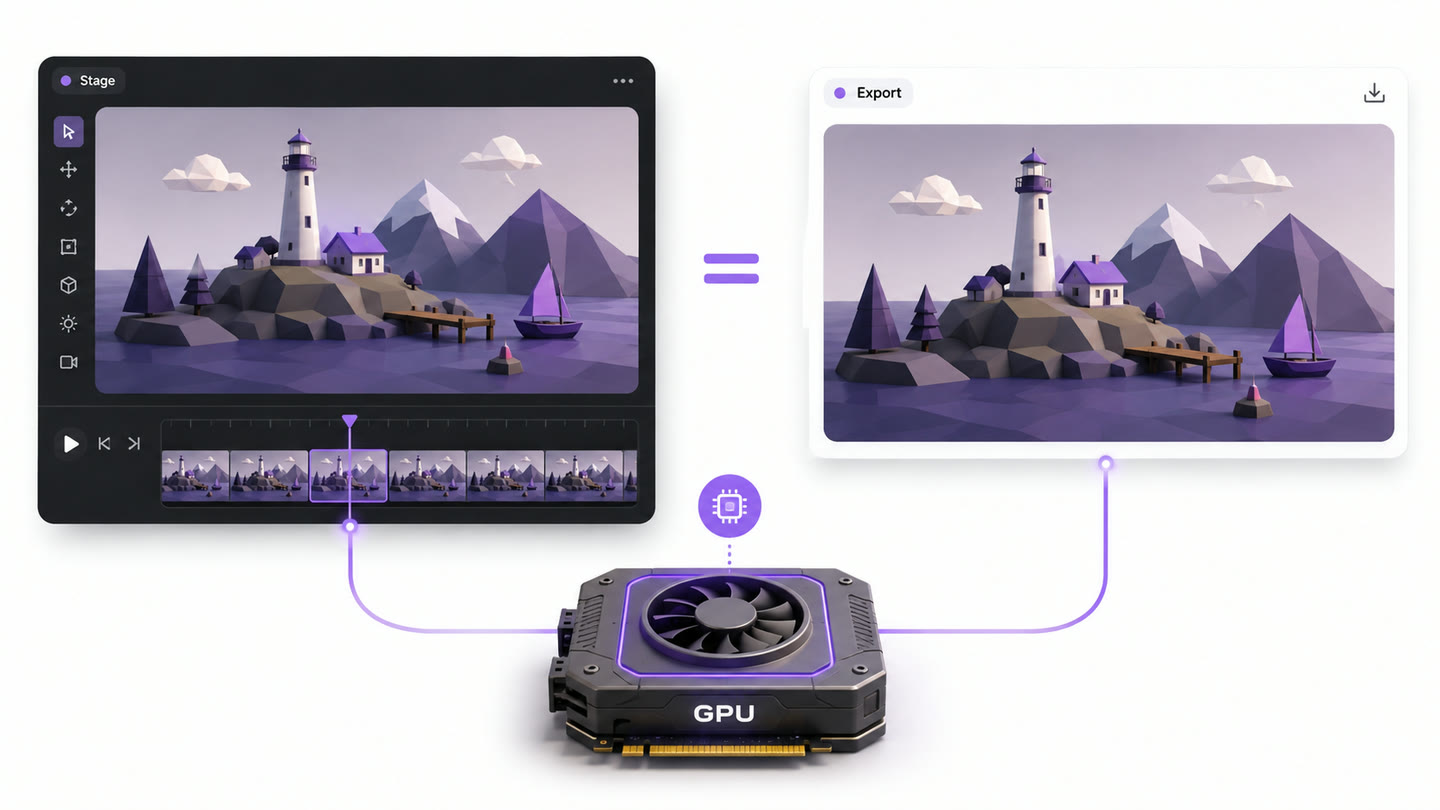
it checks its own work
An agent that cannot see its output is guessing. The stage hot-reloads every edit and the CLI renders the same pipeline headlessly, so what it inspects between turns is the file you end up shipping.
how it's built
Claude Code, Codex, Antigravity, OpenClaw or the one that ships with the studio.
"Slow the cold open", "swap that screenshot". The agent works out what that means.
Every edit hot-reloads. You review a result rather than imagining one.
A change is a diff, so revision ten keeps what worked in revision two.
It is all files, so the project lives in git and re-renders in CI.
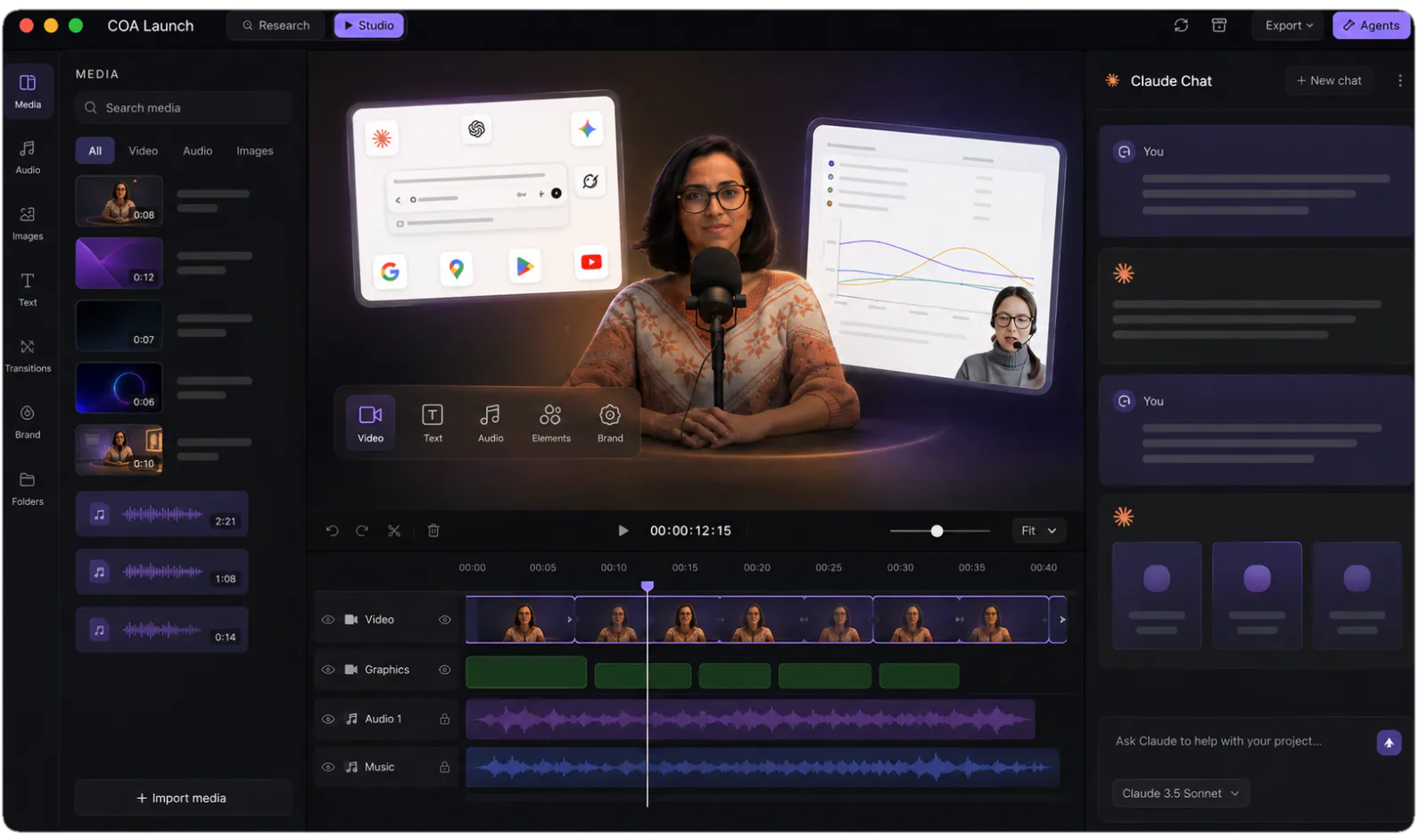
Video editing where an AI agent holds the project and works a loop: read the current state, make a change, render it, check the result, go again. Unlike a prompt-to-video generator it edits rather than regenerates, so the project persists between turns and a revision is a diff rather than a fresh roll.
Auto-captions, silence removal and smart reframe are chores inside a timeline a person is still driving. None of them builds a video you had not already cut. An agent that holds the project authors the scenes themselves.
That is the interface. Say "slow the cold open" or "swap that screenshot" and the agent works out what it means in the project and writes it. The stage hot-reloads, so you review an actual result rather than imagining one.
Claude Code, Codex, Antigravity, OpenClaw and the agent that ships with the studio. The project is ordinary files, so an agent that can edit a repository can edit a video.
The opposite. The output is an editable project, not a rendered file, so you can open the timeline and change anything by hand. You delegate the authoring, not the ownership.
Cutting footage you already shot. If you have an hour of recording and need it reduced, an agentic editor built around footage will beat this: searching a take by what was said, stripping dead air and reframing it are not what CoAnimator does. It is built for the video that does not exist yet.
Yes. The render is a command that exits 0 or 1, so the loop fits in CI or a cron job. A human can stay in as the final publish click, which is the sensible default.
Install CoAnimator, point it at the agent you already pay for, and describe the video. Every project stays editable and renders on your own machine.